
ElevenLabs review: the voice tool that made faceless channels viable
ElevenLabs is the text-to-speech service creators point to when they want a voice audiences will not comment on. The recurring caveat is the quota: character-based credits go quickly once you factor in regenerations, so weekly publishers usually need the Creator tier.
The most natural text-to-speech on the market by most accounts. Credits run out faster than the pricing page suggests.
What works
- Voices with natural pauses and emphasis, consistently ranked first in comparisons
- Voice cloning from a few minutes of audio, good enough for a personal channel
- Dubbing and speech-to-speech extend it beyond narration
- Pronunciation dictionaries fix brand names once
What doesn't
- Credits deplete fast; regenerations are the hidden cost users flag most
- Free tier has no commercial licence, so it cannot back a monetised channel
- Long scripts can drift in tone between paragraphs
- The Studio long-form editor is capable but slower than a dedicated editor
Visit ElevenLabs (opens in a new tab)Affiliate link. We may earn a commission if you sign up. It does not change the score. Disclosure
What it is
ElevenLabs converts text to speech. Pick a voice from a large library or clone your own, paste a script, download audio. It also dubs into other languages, converts one voice's delivery into another voice, generates sound effects, and has a Studio for long-form projects such as audiobooks.
Pricing is in characters. Each plan includes a monthly credit allowance; one character costs one credit on the standard model, and ten thousand characters is roughly ten minutes of speech.
What it is used for
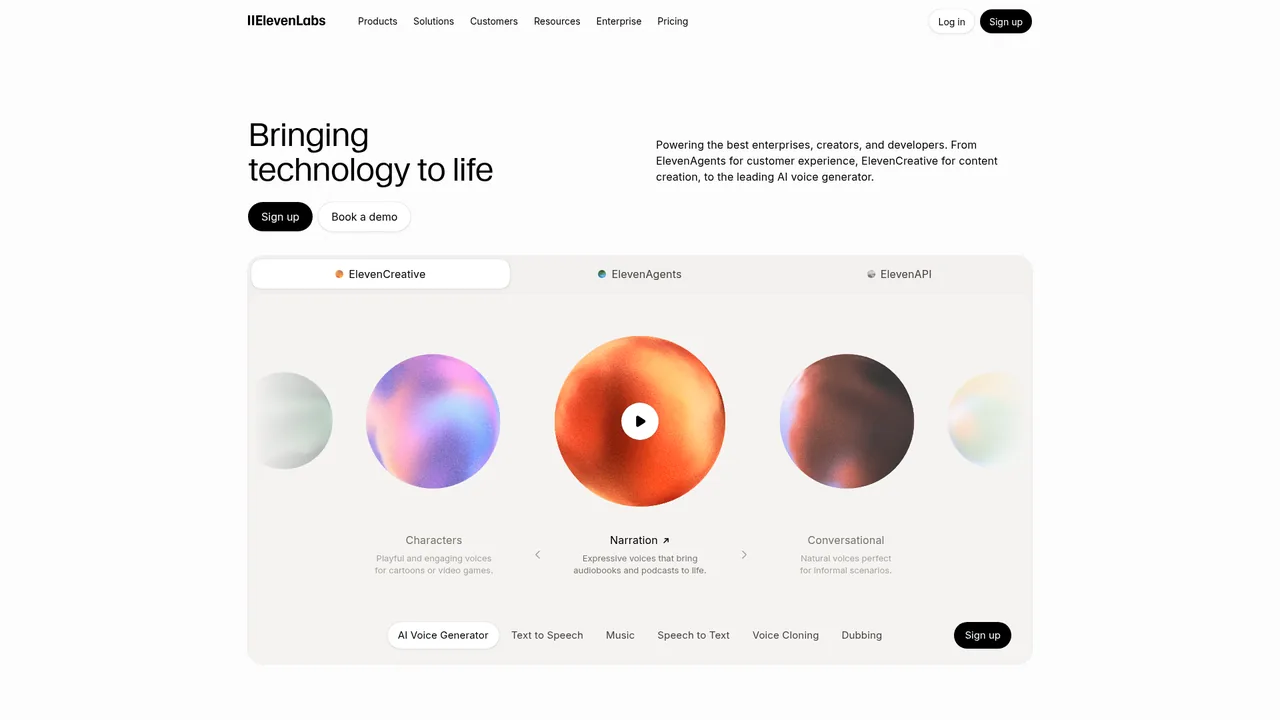
Narration for faceless YouTube channels is the headline use. Audiobooks for self-publishers, podcast intros, course modules and explainer voiceovers follow. Cloned voices let a solo creator produce a consistent host without recording every episode.
Dubbing gets used by course sellers and channels going multilingual, since it preserves the original speaker's voice.
Where it stands out
Naturalness. Pauses land where a reader would pause and emphasis follows meaning. Numbers and abbreviations are read correctly most of the time. The voices bundled into Descript and cheaper TTS services are usable for drafts; reviewers rarely rank them alongside this.
Cloning. Fifteen minutes of clean audio yields a voice that most listeners accept as the person. That changes the economics of a one-person channel.
The pronunciation dictionary is small and important. Add brand names and jargon once and every future script reads them correctly.
Where it falls short
Quota. The Creator plan advertises around 100 minutes a month. Regenerating a paragraph that came out flat costs credits every time, and users consistently report doing that. Real finished output lands closer to 70 minutes. That covers two or three videos a week and little else.
Tone drift. On longer scripts the energy sometimes shifts between paragraphs. The documented workaround is to generate sections of about 2,000 characters separately.
Licensing. The free tier is non-commercial, so a monetised channel needs at least Starter. It is only $5, but people miss it.
Who it suits
Faceless-channel operators, course and audiobook narrators, and podcasters who want consistent intros. Creator at $22 is the working plan; Starter covers one short video a week.
If you only need an occasional explainer voice, the voices built into Descript or HeyGen are adequate and already in your workflow.
Pricing
Prices checked Aug 31, 2026. Vendors change plans often, so confirm on their site before you pay.
| Plan | Price | What you get |
|---|---|---|
| Free | $0 | About ten minutes a month, non-commercial licence only. For sampling voices. |
| Starter | $6/mo, $5/mo billed yearly | Around 30 minutes, commercial licence, instant voice cloning. One short video a week. |
| Creator | $22/mo, often discounted the first month | Around 100 minutes on paper, less after regenerations. Professional cloning, higher-quality audio. |
| Pro | $99/mo | Around 500 minutes, audio API access. Daily publishing or client work at volume. |
| Scale | $299/mo | Higher credit allowance and multiple seats. Agencies and studios. |
| Business | $990/mo | Top self-serve tier with the largest allowance. Beyond this, pricing is custom. |